
Cascadia Calling, 2026.01.05
"Art is art, nature is nature, you cannot improve upon it"

Brigid and I got away for a few days during The Week Between and went up to Vancouver. It was gray and bitter cold. We napped every day in a bed so soft it made my back hurt. We ate like royalty and drank cocktails and champagne. We sat beside each other reading. We bought sandwiches from an improbably crowded butcher shop and ate them walking through a neighborhood with cracked streets and no sidewalks.
It was a beautiful few days.
We also stopped in at the Vancouver Art Gallery. Half of the first floor was given over to ceramic sculptures by the Japanese artist Shigeru Otani (aka Otani Workshop). Many of the works were conceived when Otani was in residence in BC and the first large installation included scavenged materials from local parks and forests. Throughout the exhibition I was struck by the emotive power of the monstrous figures he rendered, both in clay and in paint. In particular, I was struck by the two large, infantile painted figures on display. One was of a girl and the other of a sort of sleeping dragon child. The size of the canvas and their skewed proportions (including large eyes and balloon-like heads), combined with their neotenic features gave them real emotional tension.
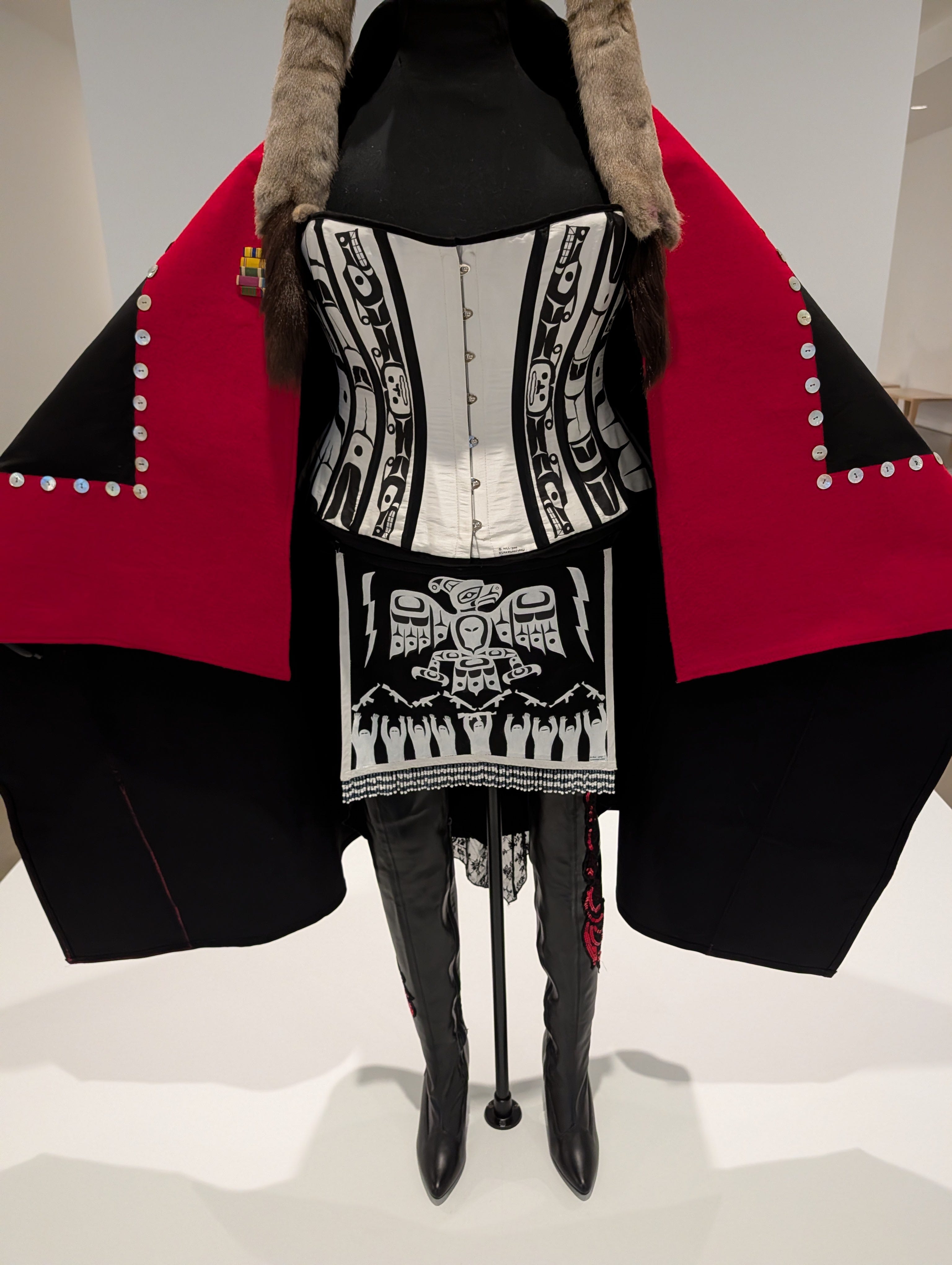
The next two floors were given over to photography and first nations art. Some of the first nations art was particularly excellent. There were a number of incredibly detailed masks and garments. I was struck by Skeena Reece’s “Raven on the Colonial Fleet”, a set of garments that combined coastal first nations motifs into contemporary fashion (high heels and a bodice) and depicted scenes that could have come from an Afghan war rug.
On the top floor was a modest collection of Emily Carr paintings. I love Emily Carr and am always struck by the vividness of her landscapes. One thing I wasn’t expecting, however, was to find “Scorned as Timber, Beloved of the Sky” in pride of place on one wall of the small gallery.
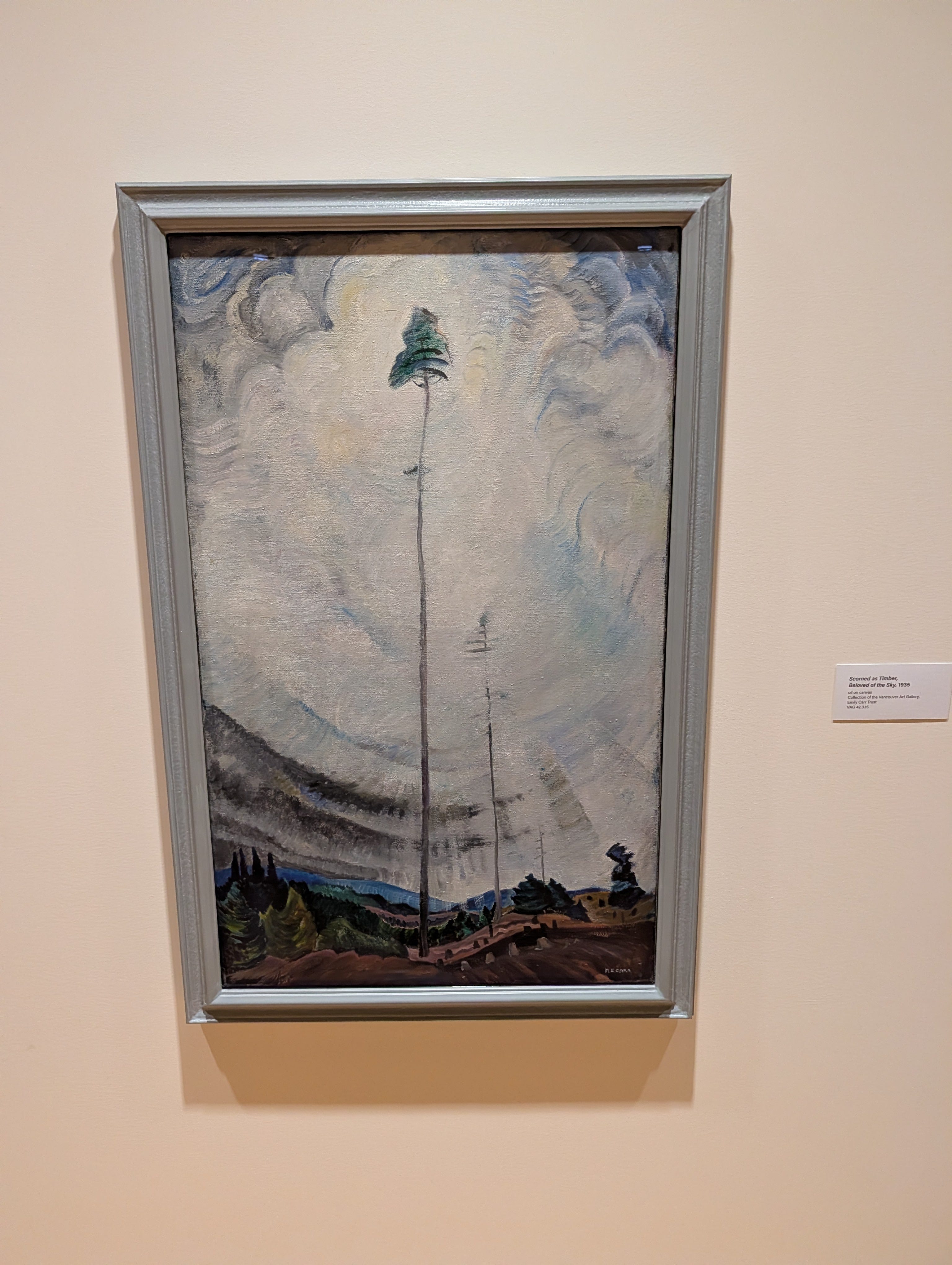
I don’t remember the first time I saw Emily Carr’s “Scorned as Timber, Beloved of the Sky”, but I do remember the period of life when it started to mean something to me. I had moved to Seattle and had dropped out of graduate school the first time, but not yet done so the second time. I spent evenings going to rock shows or in a rotation of shitty bars, most of which don’t exist anymore.1 I was sure I was going to get fired from my job. I wasn’t sure I’d mind all that much if I got fired from my job.
Ultimately, I didn’t get fired from my job.
I wasn’t depressed, but I had a profound sense of alienation. It was exhilarating at times. I felt like for the first time in my life I was doing a lot of things for no other reason than that I wanted to do them. I didn’t really desire a capital-C-Career. My life plan had been disrupted and in the chaos that ensued I was free to drift in the eddies.
I was listening to a Neko Case album late one night in my apartment. I searched for the words she has tattooed on her forearms. Whether or not I had seen the painting before, seeing it just then struck me. I was overcome with a sense resonance and empathy for the tree. It hit me in a way that visual art typically doesn’t. I remember looking at it over and over again in the following few days. I felt like the lone, radiating pine mast held deep and ineffable significance.
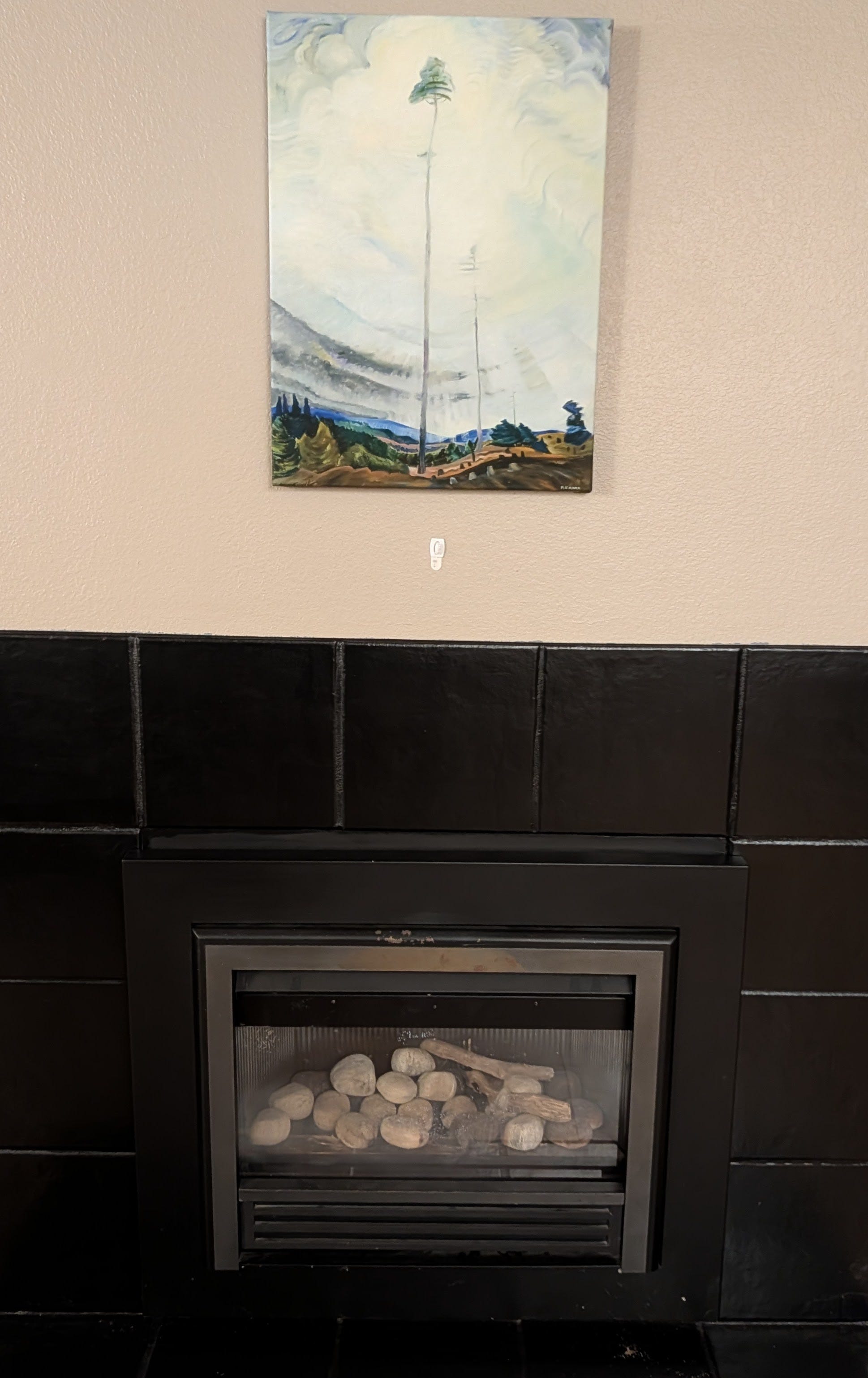
Now, fifteen or so years later, I have a nice print of it on canvas hanging over my fireplace.
Stumbling upon the painting in the fourth floor of the Vancouver Art Gallery took me by surprise. “Oh, isn’t that the painting you have over your fireplace?” Brigid asked2.
Seeing it in person, I was taken by the small details of the work. The brush strokes of the halo radiating out from the tree given it a rippling depth. The crown of light takes on a physical aspect. It seemed to heighten the scene from one of mere alienation and to accentuate the idea of divine blessing bestowed on this particular pine. I think it was this particular dichotomy that struck me so deeply on that night in the early 2010s. I felt alone but something about the conditions of my solitude felt exhilarating, even blessed. The pine was something of a beacon for the great-but-solitary life.
It’s probably not accidental that it was Emily Carr herself who was able to evoke this particular emotion. She was unusual for her fierce independence and clarity of purpose. She intentionally avoided marriage3 in order to dedicate herself entirely to art. She lived alone for much of her life, save for her menagerie. She traveled alone all over the Pacific Northwest. It’s not hard to imagine her seeing much of herself in that pine mast.
That she was able to draw these emotions out from a lonely pine she saw a century ago and fix them so clearly in my psyche is a testament to her status as one of the greatest landscape artists in human history. As she herself said:
Art is art, nature is nature, you cannot improve upon it . . . Pictures should be inspired by nature, but made in the soul of the artist; it is the soul of the individual that counts.4
RIP to the Victory Lounge and the Dexter and Hayes.
This isn’t the only time Brigid and I have bumbled our way into significant and fascinating paintings. When we were exploring the Prado together, she tapped me on the shoulder, pointed down a hallway, and said “I thought the Mona Lisa was in Italy.”
I spent a maddeningly long time trying to find the original source for that quote so I could see what is being cut out by that ellipsis. I was, regrettably, unable to track down an original source. If anyone knows it or can find it, please share it in the comments.